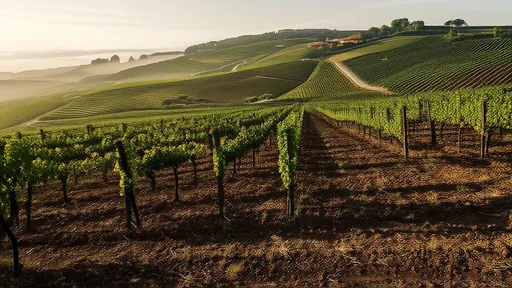
The concept of terroir, a term deeply rooted in French viticulture, transcends mere geography or soil composition; it embodies the soul of a wine, the whispered secrets of the land transferred into each grape. It is the intricate, often mystical, interplay of climate, topography, and, most fundamentally, the soil itself that bestows upon French wines their unparalleled sense of place. To understand a Burgundy or a Bordeaux is to understand the ground from which it sprang. The soil is not merely a passive medium in which the vine grows; it is an active, dynamic participant in the vinification process, a silent architect of aroma, structure, and flavor.
At its most basic level, the soil provides the vine with water and nutrients. However, the relationship is far from simple. Vines, much like stressed artists, often produce their most profound work under conditions of hardship. Poor, well-draining soils force the vine’s roots to delve deep into the earth in a desperate search for sustenance. This struggle for survival limits vegetative growth and yield, concentrating the vine’s energy into fewer, but infinitely more complex, berries. The chemical composition of the soil directly influences this nutritional uptake. Potassium levels can affect acidity, nitrogen availability influences vigour and aromatic compound production, and the presence of trace minerals like iron or magnesium can impart subtle, almost imperceptible, nuances to the wine’s character.
The physical structure of the soil is equally critical. Consider the famous galets roulés, the large, round, heat-retaining stones that blanket the vineyards of Châteauneuf-du-Pape in the Rhône Valley. These stones act as a thermal battery, absorbing the intense Provençal sun during the day and radiating warmth back to the vines throughout the cool night. This not only aids in consistent ripening but also reduces humidity around the grape clusters, minimizing the risk of rot. The result is wines of immense power, richness, and alcoholic strength, with a baked, earthy quality that is the direct taste of sun-baked stone. It is a flavour profile impossible to replicate elsewhere.
Journey north to Burgundy, and the story changes entirely. Here, in the Côte d'Or, the focus is on a intricate mosaic of limestone-rich clay soils. This combination is the holy grail for Pinot Noir and Chardonnay. The clay provides water retention, a crucial reserve in drier vintages, while the limestone offers excellent drainage, preventing the vines from becoming waterlogged. More importantly, limestone is believed to contribute to the piercing acidity and precise mineral drive that defines great white Burgundy. For the reds, it lends structure, elegance, and those hauntingly ethereal red fruit and earthy notes. A wine from the limestone-heavy Grand Cru vineyard of Le Musigny tastes profoundly different from one grown just meters away on a slightly different sub-strata; the soil’s voice is that distinct.
In Bordeaux, the narrative is one of gravel, clay, and sand, and their distribution tells the story of the region’s famed classifications. The Left Bank estates of Médoc and Graves are celebrated for their deep gravel terraces. This gravel, deposited by ancient rivers, provides superb drainage and forces roots deep. It also reflects heat back onto the vines, aiding the ripening of the late-ripening Cabernet Sauvignon, which dominates the blends here. This terroir gives wines with firm tannic structure, cassis notes, and a remarkable capacity for ageing. Cross the river to the Right Bank, to Pomerol and Saint-Émilion, and the soil shifts to clay with pockets of limestone. This cooler, moisture-retentive soil is better suited to Merlot, yielding wines that are plush, opulent, and approachable earlier, yet still capable of incredible longevity. The soil dictates the cépage, and the cépage defines the wine.
Beyond these broad strokes lie countless micro-terroirs that illustrate the soil's influence with even finer precision. In Alsace, the volcanic soils of the Rangen Grand Cru vineyard impart a smoky, flinty intensity to its Rieslings and Pinot Gris, a stark contrast to the softer, fruitier wines from the sandstone slopes nearby. In the Loire Valley, the flint-rich soils of Sancerre are credited for the distinctively gunflint or smoky note, often called pierre à fusil, that characterizes its world-famous Sauvignon Blanc. In Champagne, the chalky sub-soils of the Côte des Blancs are not just ideal for drainage; they provide cool, humid cellars for ageing wine and are thought to contribute to the steely, crisp finesse of the region’s finest Blanc de Blancs.
The influence of soil is not a blunt instrument; it is a subtle, complex dialogue. It works in concert with the macro and microclimate, the slope of the hill, and the angle of the sun. A certain soil type will express itself differently under different climatic conditions. A vintage marked by drought will amplify the influence of water-retentive clays, while a cool, wet year will reward vineyards with the free-draining properties of gravel or sand. The winemaker’s role is to listen to this dialogue and interpret it, to act as a translator between the land and the bottle. Their choices in the vineyard and cellar can either illuminate or obscure the voice of the terroir.
Ultimately, to taste a wine from a specific terroir is to taste the landscape itself. The flinty note in a Chablis is the taste of its Kimmeridgian limestone. The earthy, truffle-scented nuance of a mature Pommard is the taste of its iron-rich clay. The robust, herbal grit of a Bandol is the taste of its sun-drenched sandstone. This is the genius of French wine appellations—the recognition that place is paramount. The soil is the foundation of this philosophy, the literal and figurative ground zero of flavour. It is a reminder that wine is not made in a winery but born in a vineyard, a liquid testament to the ground it grew from, a story of the earth waiting to be deciphered, one glass at a time.
By /Aug 20, 2025
By /Aug 20, 2025

By /Aug 20, 2025
By /Aug 20, 2025
By /Aug 20, 2025
By /Aug 20, 2025
By /Aug 20, 2025
By /Aug 20, 2025
By /Aug 20, 2025
By /Aug 20, 2025
By /Aug 20, 2025
By /Aug 20, 2025
By /Aug 20, 2025
By /Aug 20, 2025
By /Aug 20, 2025
By /Aug 20, 2025
By /Aug 20, 2025
By /Aug 20, 2025
By /Aug 20, 2025

By /Aug 20, 2025
