In the sprawling landscape of American barbecue, a culinary tradition steeped in regional pride and painstaking technique, few debates are as fundamental or as fervent as the one concerning the application of sauce. It is a question that cuts to the very heart of a pitmaster's philosophy: is the sauce a integral component of the cooking process, or a final grace note offered for the diner's personal preference? Nowhere is this dichotomy more clearly illustrated than in the contrasting styles of Texas and Kansas City barbecue, two titans of the smokehouse world whose approaches are separated by more than just state lines.
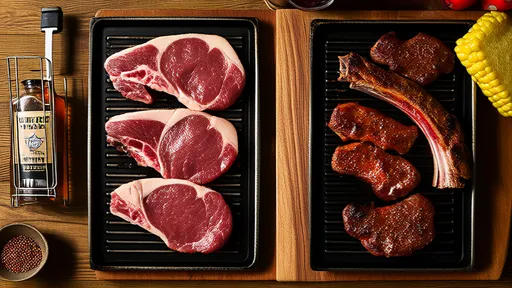
The vast state of Texas approaches barbecue with a bold, minimalist sensibility that reflects its rugged, independent character. Here, the star of the show is unequivocally the meat itself—primarily beef in the form of brisket, but also ribs and sausage. The philosophy is one of purity. The goal is to achieve perfection through the holy trinity of quality meat, a simple spice rub (often little more than coarse salt and black pepper, the legendary Dalmatian rub), and the controlled, patient application of smoke from post oak or mesquite wood. In this tradition, the meat must stand on its own merits. Its quality is judged by its inherent flavor, the tenderness of its pull, the presence of a perfect smoke ring, and the integrity of its bark—that delectably crusty exterior formed by the rendering of fat and the caramelization of the rub.
To slather such a carefully crafted product with sauce during the cooking process is, to many Texas pitmasters, not just unnecessary but sacrilegious. It is viewed as an insult to the meat, a cheap trick used to mask inferior quality or to cover up a lack of skill in the fundamental techniques of smoking. The sauce, if it is present at all, is an afterthought. It is served on the side, usually in a small plastic cup or bottle, allowing each individual diner to add it as they see fit. This practice underscores a deep respect for the customer's autonomy but also a quiet confidence from the kitchen. It proclaims, "Our meat is so good, it doesn't *need* sauce." Texas-style sauces, when found, tend to be thin, tangy, and tomato-based, with a noticeable kick of heat, designed to complement rather than smother the robust flavor of the beef.
Journey northeast to Kansas City, Missouri, and you enter a world where barbecue sauce is not a condiment but a cornerstone. Kansas City style is the great melting pot of American barbecue, influenced by the meaty traditions of Texas, the pork focus of the Carolinas, and the sweet notes of Memphis. It is an inclusive, generous, and saucy style where the mantra is often "more is more." The primary meats—burnt ends, ribs, and pulled pork—are seen as a magnificent canvas, and the sauce is the vital pigment that completes the masterpiece. The application is not a final step; it is an integral part of the cooking process itself.
In Kansas City pits, the sauce is applied during the final stages of cooking. This critical timing allows the sauce to caramelize on the meat over the heat, marrying with the rendered fats and smoke penetration to create a sticky, glossy, and deeply flavorful glaze. This process transforms the sauce, cooking out some of the sharp vinegar notes and mellowing the sugars into a complex sweetness that becomes one with the meat's crust. It creates a textural experience that is uniquely Kansas City: a slight resistance from the glaze gives way to the tender, smoky meat within. The sauce is so fundamental that it is almost always applied again, generously, just before serving, ensuring every bite is coated in that signature flavor. Kansas City sauces are famously thick, sweet, and tangy, with a molasses and tomato base that provides a rich, robust blanket for the meat.
The difference in timing is everything. It represents a fundamental divergence in culinary theory. Texas barbecue is a celebration of the raw ingredient, a testament to the idea that superior technique can elevate meat to its highest form without embellishment. The sauce on the side is a concession, not a requirement. Kansas City barbecue, by beautiful contrast, is a celebration of synthesis and layers. It posits that the whole can be greater than the sum of its parts, that the alchemical reaction between smoke, meat, fat, and sauce applied at the perfect moment creates an entirely new, and beloved, flavor profile. One style is a solo performance by a virtuoso musician; the other is a harmonious symphony.
This distinction extends to the dining experience itself. Eating Texas barbecue is a participatory act of customization. You taste the pure meat first, perhaps with a dash of sauce on a later bite to experiment. Eating Kansas City barbecue is to receive the pitmaster's completed vision directly on your plate, a fully realized opinion on how the meat should taste. One is not inherently better than the other; they are simply different expressions of a shared passion for slow-cooked meat. They cater to different palates and different moods. Sometimes you crave the unadulterated, primal taste of perfectly smoked brisket. Other times, nothing will do but the sweet, sticky, finger-licking bliss of sauce-glazed ribs. This glorious contrast is not a weakness but the greatest strength of American barbecue, a tradition vast enough to contain and celebrate both philosophies in all their saucy, and unsaucy, glory.
By /Aug 20, 2025

By /Aug 20, 2025

By /Aug 20, 2025

By /Aug 20, 2025

By /Aug 20, 2025

By /Aug 20, 2025
By /Aug 20, 2025

By /Aug 20, 2025

By /Aug 20, 2025
By /Aug 20, 2025

By /Aug 20, 2025

By /Aug 20, 2025
By /Aug 20, 2025

By /Aug 20, 2025
By /Aug 20, 2025

By /Aug 20, 2025
By /Aug 20, 2025

By /Aug 20, 2025
By /Aug 20, 2025

By /Aug 20, 2025
